

Honor is a learning and teaching platform for educational institutions and enterprises. It was founded on the simple but powerful belief that online learning can — and should — be just as transformative as in person learning.
I was hired as a founding member in 2020 by CEO Joel Podolny, former Dean of Yale School of Management and Dean of Apple University, which he co-founded with Apple CEO Steve Jobs.
Honor gave me something rare: a front-row seat to a company that had to figure out what it was before it could figure out what to build. I had the rare chance to be a leading part in everything from naming to positioning, marketing and GTM, and now designing the AI tools at the center of the product.
Building the Foundation
Brand → Strategy → Go-to-Market / 2020 – 2022
1
Before Honor could have a product, it needed a point of view. In 2020, I joined as the founding design hire with a brief that was broader than most: bring design thinking in from the ground floor, across every function, not just the surface.
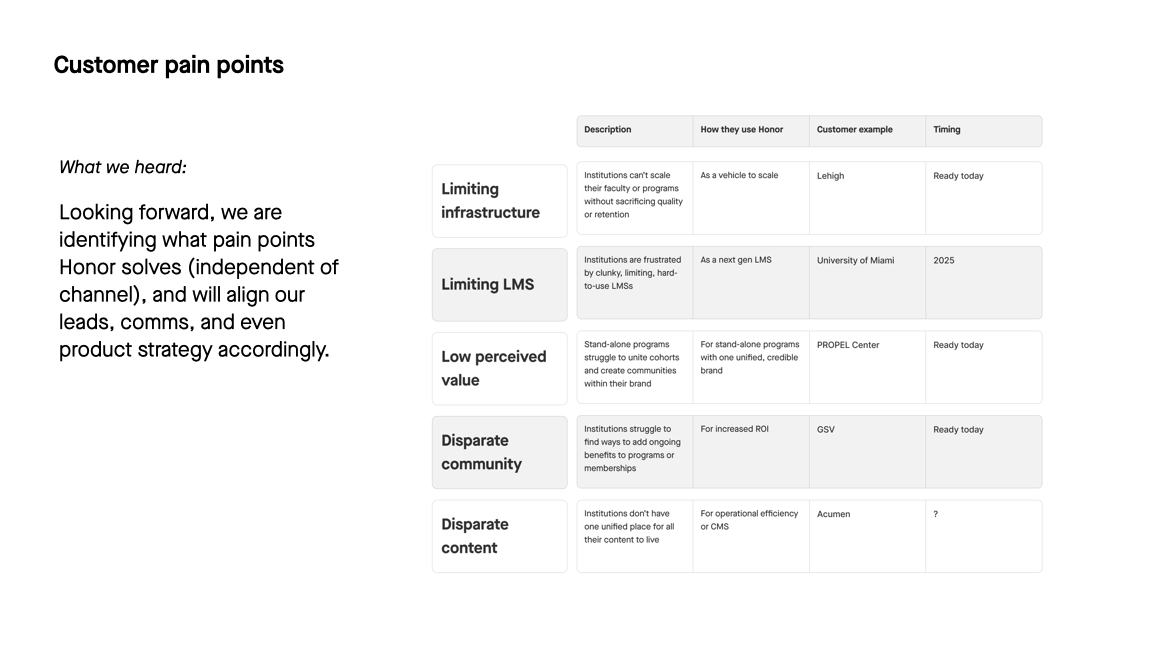
We started with naming and identity — not as a branding exercise, but as a forcing function for strategic clarity. What did this company believe about learning? What made it different? The answers shaped the visual language, but more importantly they shaped the sales pitch, the market positioning, and the ICP analysis that followed in 2021.
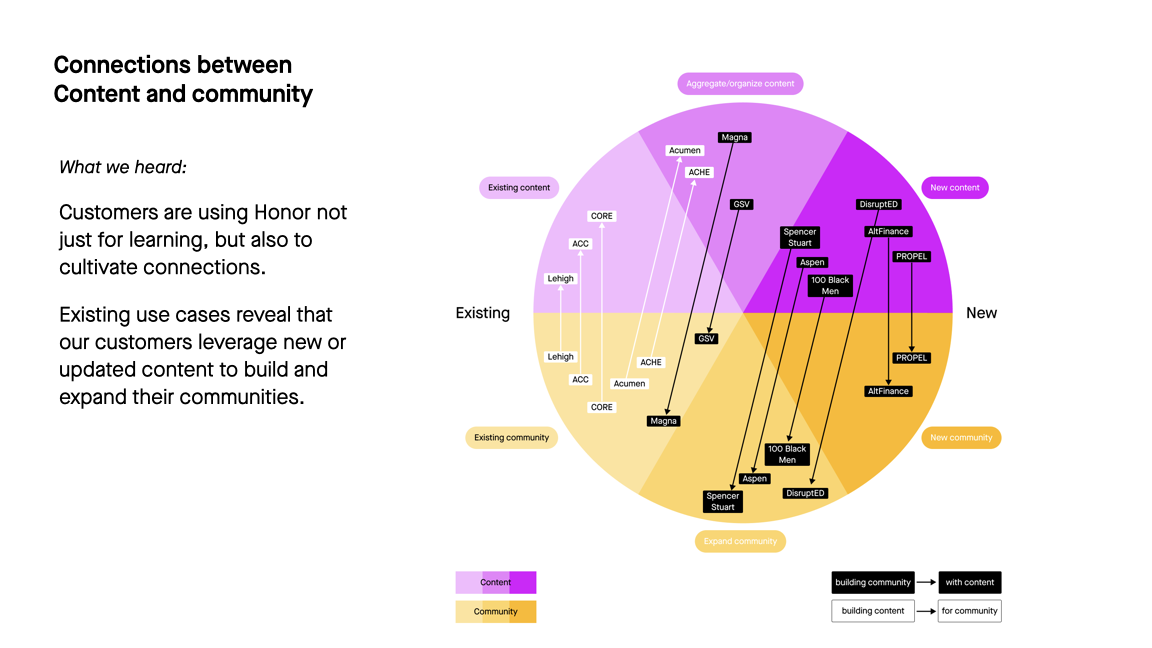
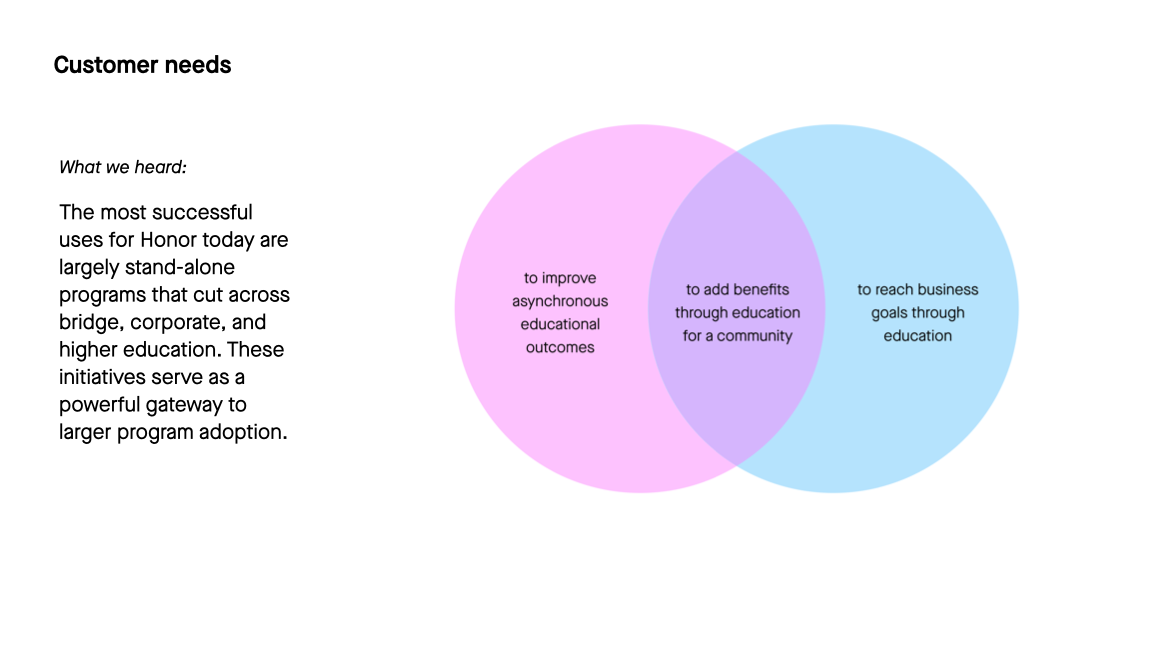
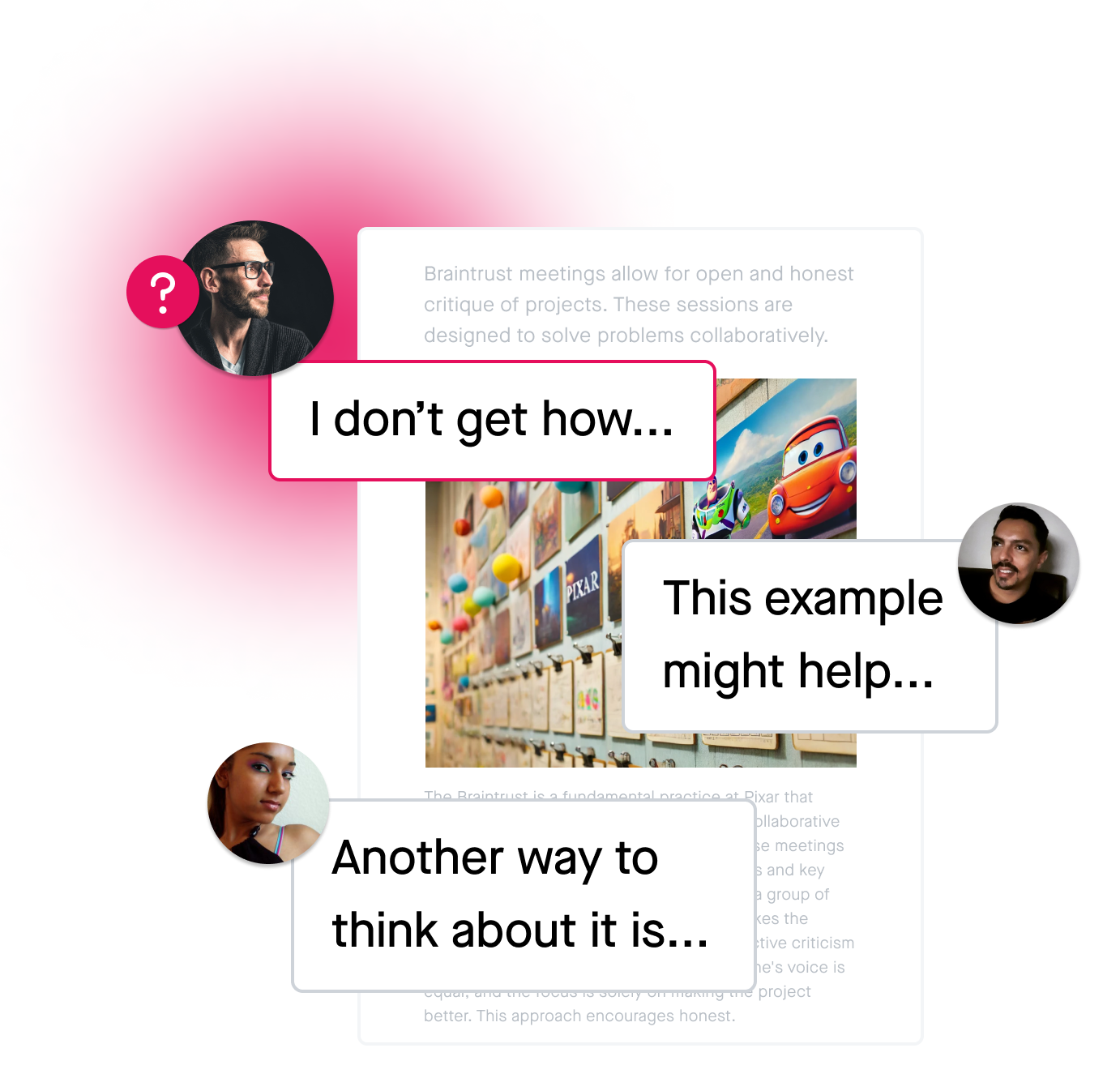
By 2022, I was leading the design of the marketing website and go-to-market system, translating science and pedagogy into a product story that could land with buyers ranging from Stanford to Austin Community College, from Netflix to 100 Black Men.







Building the Product
Head of Product Design / AI Tooling / 2023 – present
2
The shift from “design for marketing” to “design for product” happened gradually, then completely. By 2023 I was Head of Product Design, and the question had changed: not how does this look, but what should this do.
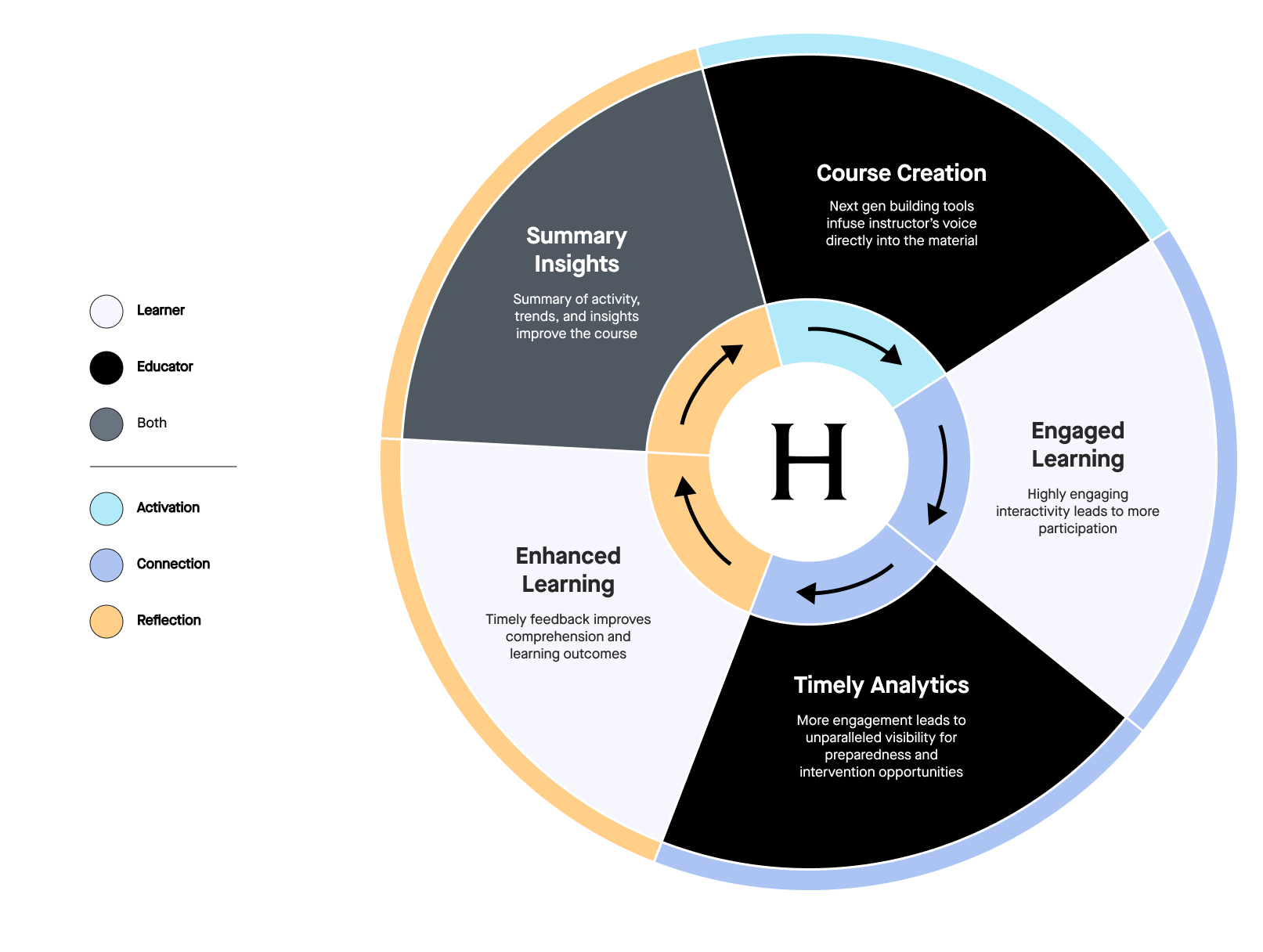
We spent a lot of time in strategy and research. What are the necessary feedback loops for learning? How do we meet educators and learners where they are and predict what they need exactly at the right moment?
The first major AI project was Honor Assist — a live tool that lets instructors build and curate course content using AI. It’s in production. Real instructors use it. I designed it in direct collaboration with engineers, in the room before anything was decided, which is the only way I know how to work.
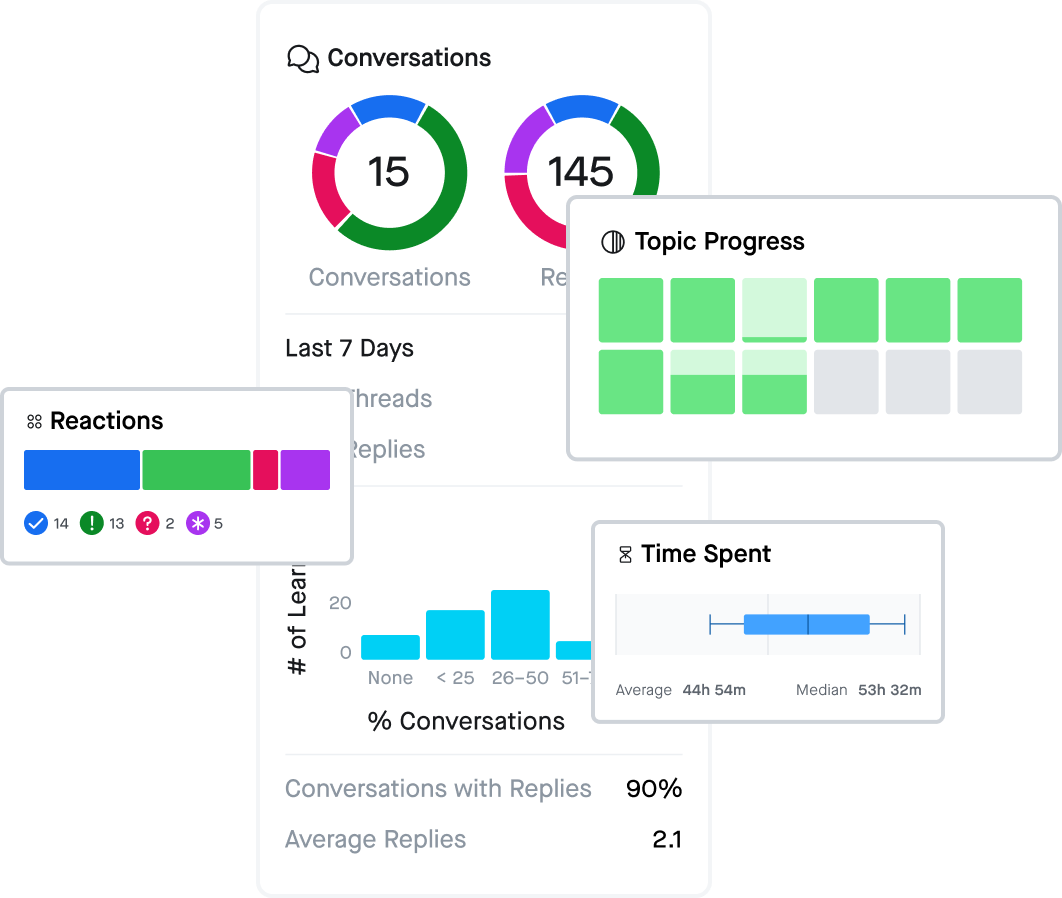
The concept graph came next — an original idea of mine. The problem I was trying to solve: how do you know what a learner actually understood, rather than just what they clicked through? The Recap system surfaces the concepts a learner encountered in a session, tracks their engagement signals per concept (reactions, saves, comments), and shows competency estimates alongside cross-curriculum connections. It asks a harder question than most learning tools do.
I’m currently designing the AI coach — a system that catches learners at the moment of real engagement (a reaction, a highlight, a question) and invites them to think harder rather than move faster. The coach doesn’t give answers. It prompts reflection, surfaces peer perspectives, and turns a momentary “this matters” into a private note, a structured conversation, or a thread with a cohort. It’s early design, in active conversation with engineering.
Building the System
Culture Codex / Knowledge Graph Architecture
3
The work I’m most proud of doesn’t live in a single screen. It lives in the architecture of how an organization’s knowledge gets encoded and then put back to work for its people.
Honor’s AI coach isn’t general-purpose. It’s built on a knowledge graph — what we call the Culture Codex — assembled from an organization’s actual artifacts: leadership directives, KPIs, surveys, interviews, stories, values documents. Honor’s design and content team filters and shapes that material. The result is a coach that can answer questions with the voice and values of a specific organization, not a generic AI.
The value flows in three directions: individuals track their own learning journey and growth over time; managers see comparative, partially-anonymized department data; and leadership gets organizational health signals through trend spotting and gap detection. Same underlying system, three very different lenses.
That’s the design problem I find most interesting — not how a screen looks, but how information moves through an organization, how AI earns trust by being contextually right rather than generically helpful, and what people are willing to learn when the system actually understands who they are.